
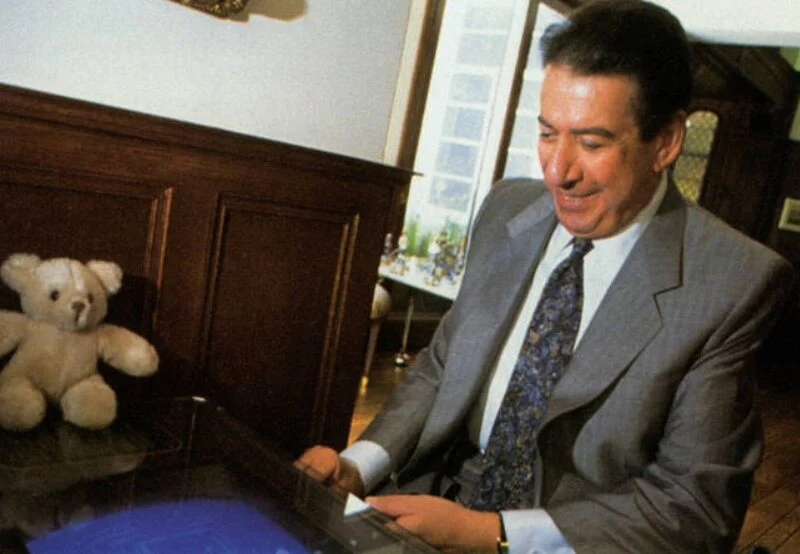
The Unlikely Rise of an Arcade Baron
Gather ‘round, dear readers, for a tale about David Rosen, a man whose superpower was turning quarters into chaos. At the ripe old age of 95, he decided he’d seen enough of this “life” thing and passed away on Christmas Day, probably leaving behind a legacy that could fill an arcade cabinet.
From Airman to Art Dealer—Wait, What?
Once upon a time in the 1950s, an American Airman decided that taking to the skies wasn’t nearly as exciting as dealing art and snapping photos for Japanese ID cards. Enter Rosen Enterprises Ltd, where kickbacks and paperwork were this non-flying hero’s original jam. But let’s be honest, who needs art when you can have coin-operated galas?
All Aboard the Coin-Op Express
Fast-forward to post-war Japan, where disposable income was on the rise, and Rosen had a lightbulb moment that would make Thomas Edison proud. Spotting a lucrative niche, he thought, “Why not import some coin-op amusements from the U.S.? What could possibly go wrong?” A quick trip to the Japan Ministry of International Trade and Industry ensued, and with a license in hand, he jumped headfirst into a sea of arcade machines. Spoiler alert: things went surprisingly well!
As Rosen himself would later recount to *Next Generation Magazine*, the machines yielded returns in less than two months. “It’s embarrassing to say this,” he admitted, probably while trying to count the piles of cash, “but those machines were a hit, despite the 200% import fees!” Talk about a “money for nothing, arcade games for free” kind of operation.
Arcade Domination: One City at a Time
As the prevalent ruler of the arcade realm, Rosen began opening establishments like a Sugar Rush after a candy binge. “By the time I left, there wasn’t a city in Japan that didn’t have one of our arcades,” he proudly proclaimed. Imagine a map dotted with bright lights, each illuminating the triumph of shooting and hunting games—a true arcade Mecca!
The Big Merge: A Match Made in Arcade Heaven
As the 60s rolled around like a high-score alert, other companies took notice of Rosen’s newfound fame and fortune. Taito and Nihon Goraku Bussan, the jukebox duo, sought their own arcade destiny and eventually flirted with the idea of merging with Rosen Enterprises. Turns out, if you can’t beat ‘em, merge ‘em!
In 1965, after some back-and-forth that could rival a soap opera, it became official. “Sega Enterprises Ltd” was born out of this partnership, effectively rebranding Rosen himself as the CEO/President of this new powerhouse. Because why not keep the best name and ditch the rest, right?
The Game Changer: From Amusement to Video Guile
Next, in 1966, Sega produced its very first game, *Periscope*. This launched the company into modern gaming stardom, and soon, Rosen was yet again pushing video game boundaries. By 1967, the arcade saga thickened when he co-founded the Japan Amusement Association, wearing yet another hat—this time as the chairman!
From CEO to Savior of Sega
Rosen retained the throne at Sega for more than two glorious decades. Eventually, Gulf+Western Industries got tired of owning Sega like a neglected pet and decided to sell. In a move that screamed “Don’t let the door hit you on the way out,” Rosen and his pal Hayao Nakayama swooped in for a buyout. They formed Sega of America in Los Angeles, where Rosen took on the dual role of co-president until 1996. What an epic exit; overseeing launches until the Sega Saturn was like watching a blockbuster trilogy unfold!
In summary, David Rosen wasn’t just a name lost to the pages of time. He was the grand architect of the arcade experience that changed the airwaves—and a few childhoods—forever. May his legacy live on, preferably in a high-score cabinet somewhere far, far away.