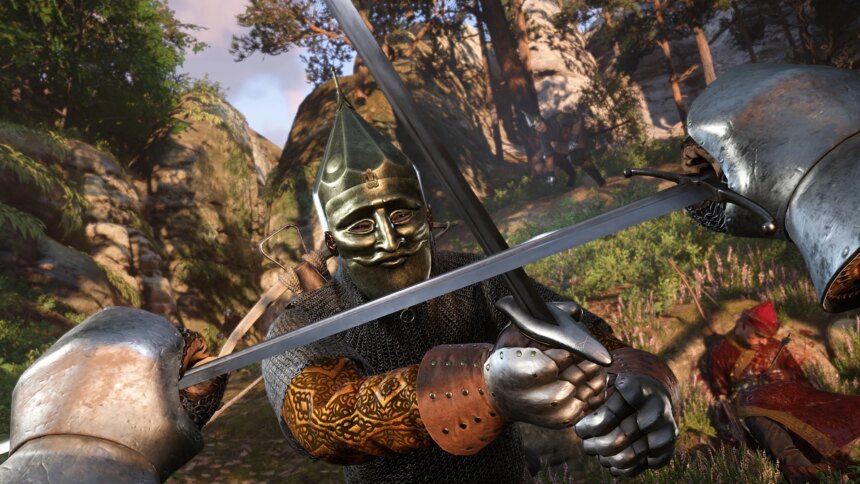
Gather ‘round, gamers and creators, because there’s a delightful spat happening in the world of game development! The co-founder of a certain medieval-themed title, known for its historical accuracy and a lack of space dragons, has recently decided to enter the fray regarding the hot topic of generative AI. It all started with a revelation from a competitor’s studio about their secret weapon—a shiny new AI tool—prompting some players to clutch their pearls in horror.
AI: The New Buzzword that Makes Gamers Sweat
Recently, the CEO of a much-beloved RPG studio confirmed their use of generative AI to jumpstart ideas for a shiny new installment in a classic series. They claimed the AI tech was purely for “fleshing out PowerPoint presentations” (because nothing says ‘epic adventure’ like a solid slide deck) and crafting placeholder text. Rest assured, all that glorious, pixelated goodness will still come from human hands eventually. But let’s face it—AI peeking into the creative process left some players feeling like they’d just discovered a suspicious-looking pizza box in their favorite restaurant’s dumpster.
The Backlash: A Great Drama Unfolds
Social media erupted like a volcano covered in lava-themed memes. “Using AI for concepts is like replacing Shakespeare with a parrot!” some exclaimed, fingers wildly tapping on their keyboards, forcing others to look at this game development drama as if it were the latest season of “The Bachelor.” Meanwhile, the CEO was on a defense mission reminiscent of a medieval knight trying to shield their castle from oncoming siege.
In response, the CEO had to clarify—no, they weren’t actually planning to replace humans with robots in the creative department. It was merely a tool for brainstorming, like Google or Pinterest but with a sprinkle of sci-fi flair. “Holy cow, everyone! Relax! We’re not sending our concept artists packing!” they declared, probably while scrolling through a Google Images gallery of concept art.
Enter the Knight in Shining Armor: Warhorse Studios’ Take
Now, here comes Daniel Vávra, another figure from the medieval gaming kingdom. He decided to ride in on this controversy like a steed from a fantasy tale, suggesting that everyone’s freaking out about AI is akin to folks smashing steam engines back in the 19th century. “Isn’t this just the same old song and dance?” he mused over on a social platform, sharing wise words like a sage advising a bedraggled hero.
He jokingly pointed out that while he himself might not be a fan of AI-generated art (cue dramatic sigh), it’s here to stay, like that one friend who just won’t leave the party even after the lights go out.
From Comfort Zone to AI Zone
According to Vávra, the truth is, game development isn’t a walk in the park—more like a grueling trek through a muddy swamp. Seven years and countless hours might be spent creating a game, only for some critic to lament, “Well, this wasn’t my cup of tea!” And let’s not even talk about that guy Tom, who logged 500 hours recording utterly generic heckling…
“Listen, if AI can make the production process a teensy bit less torturous, why not?!” he exclaimed, envisioning a world where creative minds could leave behind the mundane and focus on the epic quest of world-building. Imagine a game produced in a year instead of a lifetime. Vávra, in his wisdom, proposes using AI for the dull stuff while letting human talent work on the projects that truly matter. Boring tasks, be gone!
The Multi-faceted Uses of AI in Gaming
Now, let’s talk voice acting—Vávra mentioned that AI could help with mundane NPC dialogue. Picture this: Instead of spending a fortune on voice talent for every background character who just wants directions, AI does the heavy lifting so that actors can shine bright during the climactic “save the world” scenes.
“Imagine asking a lowly NPC about their opinion on the neighborhood food truck or where the treasure is buried!” he quipped, jovially imagining an RPG debacle where every NPC had a veritable encyclopedia of trivia and banter at their beck and call.
AI: The Future or the Apocalypse? Who Knows!
As Vávra concluded, the rise of AI could mean a sea change in game development, similar to indie games bursting onto the scene thanks to online platforms. Will Hollywood as it stands be revolutionized, or are we on the fast track to judgment day with Skynet? Only time (and a little humorous foresight) will tell!
One thing is certain though—the games might just get weirder, wilder, and potentially filled with bizarre dialogue options no human actor would ever dare to voice. But that’s a revolution worth watching, if one can stomach the calls for pizza in the meantime. Cheers to the future of gaming and the wonders of AI, and stay tuned for whatever comes next—be it treasure or trash!